Then potential of ZenoWell transcutaneous auricular vagus nerve stimulation for menopause
Menopause is far more than isolated hot flashes—it represents a profound shift in autonomic and neuroendocrine regulation. As ovarian hormones, especially estradiol, decline, the body's stress-response system (the HPA axis) undergoes significant changes: some women experience rising cortisol levels and flattened daily rhythms, while others show blunted cortisol reactivity and reduced feedback sensitivity. Importantly, aging amplifies cortisol stress responses approximately three times more in women than in men, suggesting that the loss of ovarian hormones removes a protective buffer on stress physiology. In the U.S., up to 80% of menopausal women experience vasomotor symptoms, and 40–60% report significant sleep disturbances—symptoms that carry measurable economic and quality-of-life costs.
At the same time, parasympathetic nervous system activity—reflected in vagal tone and heart rate variability (HRV)—tends to decline during the menopausal transition, creating a state of reduced stress resilience, impaired emotion regulation, and difficulty downshifting into restorative modes. This autonomic imbalance is often described as relatively higher sympathetic ("fight-or-flight") activity and reduced parasympathetic ("rest-and-digest") influence, linked to sleep difficulty, vasomotor symptoms (hot flushes and night sweats), and changes in blood pressure regulation and baroreflex function. In practical terms: if the autonomic system is persistently "revved up," the body may have a harder time downshifting into restorative states—affecting sleep depth, stress tolerance, pain processing, and daily energy.
This convergence—declining estradiol, dysregulated cortisol, and reduced vagal tone—forms a "perfect storm" that underlies the interconnected symptom clusters of menopause: sleep disruption amplifies pain sensitivity, chronic stress worsens vasomotor symptoms, and autonomic imbalance makes everything harder to regulate. This is where the vagus nerve becomes relevant. The vagus nerve is the body's major parasympathetic pathway, connecting the brain with the heart, lungs, gut, and immune system. Higher vagal tone is associated with better emotion regulation, healthier cortisol patterns, improved sleep quality, and greater stress adaptability. Transcutaneous auricular vagus nerve stimulation (taVNS)—a non-invasive method of activating vagal pathways through the outer ear—offers a promising approach to support women through this transition by targeting the autonomic system upstream of many menopausal symptoms.
What Is the Vagus Nerve—and Why Stimulate It?
The vagus nerve is the major parasympathetic nerve connecting the brain with key organs (heart, lungs, gut). It helps regulate:
- heart rhythm and cardiovascular reflexes
- breathing patterns and respiratory–cardiac coupling
- inflammation-related signaling (via neuroimmune pathways)
- digestion, gut–brain communication
- stress reactivity and emotional regulation
Vagus nerve stimulation (VNS): When vagal pathways are engaged appropriately, many people experience a shift toward calmer physiological states—the kind associated with improved recovery, stress resilience, and sleep readiness.
What is taVNS?
Transcutaneous auricular vagus nerve stimulation (taVNS) is a non-invasive form of VNS delivered through the outer ear (auricle), where a branch of the vagus nerve innervates specific regions. Compared with implanted VNS, taVNS is designed for accessibility and everyday use in research and wellness settings.
Why taVNS May Have Potential in Menopause
Menopause symptoms often cluster: sleep problems amplify pain sensitivity; stress worsens hot flush perception; fatigue increases anxiety; and autonomic dysregulation can make everything feel harder to control. taVNS is interesting because it targets a system that is upstream of many of these experiences: autonomic nervous system regulation.
Below are several menopause-relevant symptom domains where taVNS may be supportive, based on current autonomic and neuroimmune perspectives and adjacent clinical taVNS research:
A) Sleep and nighttime recovery
Menopause-related sleep disruption is common and is discussed in autonomic-focused menopause literature as part of hormone-related changes in autonomic and vascular physiology. Because vagal activation is associated with “downshifting” toward rest, taVNS is being explored broadly for sleep quality and arousal regulation (including in other clinical contexts where sleep disturbance and inflammation-like symptoms co-occur).
Wellness implication: taVNS may be most relevant as a pre-sleep routine or as support during periods of heightened nighttime arousal.
B) Stress load, anxiety-like symptoms, and autonomic reactivity
The autonomic system is a major mediator between perceived stress and bodily symptoms (heart rate shifts, tension, GI discomfort, temperature sensitivity). Narrative work on autonomic function across hormonal phases (e.g., menstrual cycle-related autonomic and emotional changes) reinforces that hormonal states and emotional/autonomic responses are intertwined, which conceptually supports why an autonomic-targeting approach might matter during the menopausal transition as well.
Wellness implication: taVNS paired with paced breathing is often used as a state regulation tool—a structured way to practice “turning down” physiological arousal.
C) Pain and cramping-style symptom sensitivity
Even though primary dysmenorrhea is not menopause, it provides relevant clinical evidence that taVNS can influence pain-related outcomes in hormonally modulated conditions. A randomized controlled trial in individuals with primary dysmenorrhea reports beneficial effects of taVNS, supporting the idea that auricular vagal modulation may impact pain perception and related symptoms.
Wellness implication: for menopause-associated pain (e.g., musculoskeletal discomfort, headache susceptibility, heightened pain sensitivity), taVNS is a plausible supportive option worth researching further.
D) Inflammation-like symptoms, fatigue, and “whole-body” symptom clusters
Menopause research often frames symptom burden within broader autonomic and vascular changes. In parallel, neuroimmune models of transcutaneous VNS have been proposed in conditions like breast cancer to address quality-of-life domains such as fatigue, insomnia, anxiety, and inflammation-related pathways (noting that some of this literature is emerging and may include preprints).
Wellness implication: taVNS is increasingly discussed as a tool that could support neuroimmune balance and recovery, though menopause-specific clinical trials are still an area where more direct evidence is needed.
The Potential Role of ZenoWell taVNS: Designing Modes Around Menopause Needs
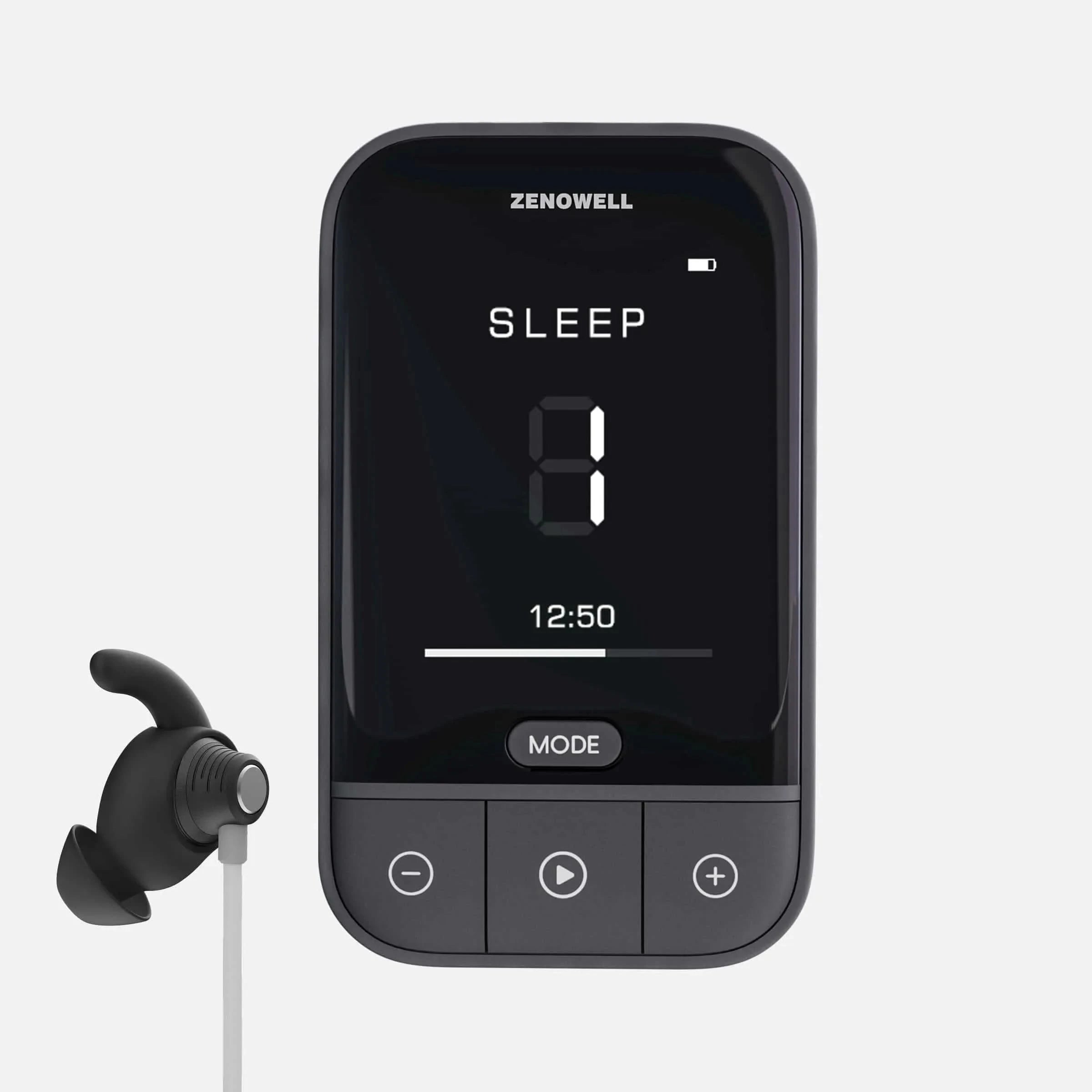
ZenoWell devices are wellness-oriented taVNS products. In a menopause context, the key is not “one setting fits all,” but designing modes that match common symptom patterns—sleep disruption (SLEEP mode), stress reactivity (RELAX mode), headache sensitivity (RELIEF mode), and fluctuating daily energy (MEDIT mode).
Practical note: For menopause users, consistency often matters more than intensity. Gentle, repeatable routines tend to integrate best with sleep and stress management.
Menopause-related symptoms often reflect more than a single hormone effect—they can involve autonomic regulation, vascular responses, sleep physiology, stress reactivity, and pain processing. Because the vagus nerve is deeply involved in these systems, taVNS is a compelling, non-invasive approach that may support sleep, stress resilience, and comfort during menopause—while the field continues building menopause-specific clinical evidence.
Important note: This blog is for education and wellness information only. It is not medical advice, and it does not diagnose, treat, or cure menopause-related conditions. Always discuss symptoms and treatment options with a qualified clinician—especially if you have cardiovascular conditions, implanted devices, seizures, or are pregnant.
References:
- Survey of patient experience and management of vasomotor symptoms (notes VMS affect up to ~80% of menopausal women in the United States). https://journals.lww.com/menopausejournal/fulltext/2024/11000/survey_of_patient_experience_and_management_of.7.aspx
- Effects of Sleep Problems During Menopause. https://www.swanstudy.org/womens-health-info/effects-of-sleep-problems-during-menopause/
- Kızkın, Zeynep Yıldız, Rıdvan Yıldız, and Ali Veysel Özden. "Effects of Transcutaneous Auricular Vagus Nerve Stimulation in Individuals with Primary Dysmenorrhea: A Randomized Controlled Trial." Neuromodulation: Technology at the Neural Interface (2025).
- Lee, E. J., and M. L. Keller-Ross. "Menopause and its effects on autonomic regulation of blood pressure: Insights and perspectives." Autonomic Neuroscience (2025): 103295.
- Roy, Sankanika, Elettra Agordati, and Thomas DW Wilcockson. "Autonomic nervous system, cognition, and emotional valence during different phases of the menstrual cycle—a narrative review." NeuroSci 6.3 (2025): 78.
- Stokes, William H., et al. "Vasomotor symptoms of menopause, sympathetic activity, and blood pressure in postmenopausal females." American Journal of Physiology-Heart and Circulatory Physiology (2025).
Articles Similaires

Life beyond the numbers: How ZenoWell taVNS empowers lifehackers

Beyond Winter Blues: Supporting Your Heart and Brain Health with ZenoWell Vagus Nerve Stimulation

ZenoWell vagus nerve stimulation technology: Supporting elite Olympic performance

ZenoWell vagus nerve stimulation for metabolic health: a holistic, preventive care

When winter storms meet winter blues: how ZenoWell vagus nerve stimulation offers care

Valentine's Day special: How ZenoWell taVNS helps couples navigate stress together